
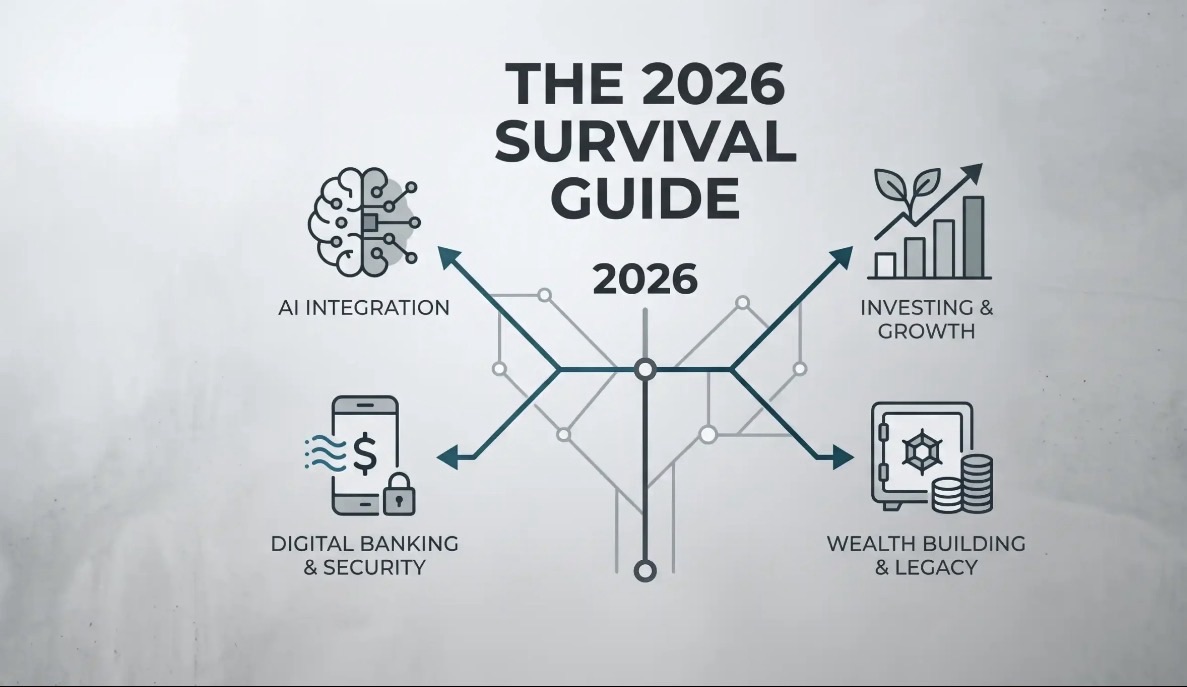
The relationship between technology and finance is evolving faster than ever.
Artificial intelligence is transforming workplaces, digital banking is becoming the norm, cybersecurity threats are growing more sophisticated, and investors are adapting to entirely new opportunities.
In 2026, understanding these changes is no longer optional. It has become an essential skill for protecting your finances, career, and digital identity.
The Future of Money: Digital Payments and Financial Innovation
Cashless payments continue to grow worldwide, while consumers increasingly rely on digital banking platforms for everyday financial activities.
As financial technology advances, users are paying closer attention to:
- Privacy and financial data protection
- Mobile payment security
- Digital banking services
- Alternative investment opportunities
- Cryptocurrency regulation
The shift toward digital finance is creating both convenience and new challenges for consumers.
Bitcoin and Digital Assets
Cryptocurrencies remain an important part of the financial conversation in 2026.
Investors are increasingly focused on practical questions such as:
- Long-term portfolio diversification
- Digital asset security
- Tax reporting requirements
- Estate planning for cryptocurrency holdings
As the market matures, digital assets are increasingly viewed as part of a broader investment strategy rather than a speculative trend.
Artificial Intelligence and the New Workforce
Artificial intelligence is reshaping industries across the global economy.
While automation continues to improve productivity, it is also changing the skills employers value most.
The Rise of AI Management
Organizations are increasingly using multiple AI systems to support operations, customer service, marketing, and analytics.
As a result, new roles are emerging that focus on:
- AI oversight
- Workflow automation
- Data quality management
- Strategic decision-making
- Human-AI collaboration
The ability to effectively manage AI-powered systems may become one of the most valuable professional skills of the decade.
Solo Businesses Powered by Technology
Technology is lowering the barriers to entrepreneurship.
Many small business owners now use software and AI tools to automate:
- Marketing campaigns
- Customer support
- Accounting processes
- Content creation
- Administrative tasks
This allows individuals to operate highly efficient businesses with significantly fewer resources than in previous years.
Cybersecurity in an AI-Driven World
As technology becomes more advanced, cyber threats are evolving as well.
Fraudsters now use artificial intelligence to create convincing scams, impersonations, and social engineering attacks.
Essential Security Practices for 2026
Consumers should consider:
- Using multi-factor authentication
- Securing financial accounts
- Monitoring credit activity regularly
- Protecting sensitive personal information
- Verifying communications before sharing data
Strong cybersecurity habits are becoming just as important as traditional financial planning.
Investment Trends Shaping 2026
Investors are paying attention to industries benefiting directly from technological innovation.
High-Growth Sectors
| Sector | Growth Potential | Key Drivers |
|---|---|---|
| Artificial Intelligence | Very High | Automation and productivity |
| Cybersecurity | Very High | Rising digital threats |
| Semiconductors | High | AI infrastructure demand |
| Cloud Computing | High | Digital transformation |
| Digital Payments | High | Cashless transactions |
| Renewable Energy | High | Data center expansion |
| Biotechnology | Medium-High | Healthcare innovation |
Diversification across emerging technologies remains a popular strategy among long-term investors.
Digital Privacy and Personal Data
Consumers are becoming increasingly aware of the value of their personal information.
Questions surrounding data ownership, privacy rights, and AI-generated insights are driving demand for greater transparency.
Key concerns include:
- Data collection practices
- AI profiling systems
- Identity theft
- Financial data protection
- Online privacy management
Understanding how personal information is collected and used is becoming a critical aspect of digital literacy.
Technology Terms Every Investor Should Know
Decentralized Physical Infrastructure Networks (DePIN)
Networks that allow individuals to contribute physical resources such as storage, connectivity, or computing power in exchange for rewards.
Zero-Knowledge Proofs (ZKPs)
A privacy technology that allows verification of information without revealing sensitive data.
Quantum-Resistant Security
Cryptographic systems designed to withstand future advances in quantum computing.
Digital Identity Systems
Technologies that help individuals securely verify their identity online while maintaining greater control over personal information.
Conclusion
Technology and finance are becoming increasingly interconnected.
Success in 2026 is not simply about understanding investments or learning new software. It is about developing the ability to adapt, protect personal data, evaluate opportunities, and make informed decisions in a rapidly changing environment.
The individuals who thrive in the coming years will be those who understand both the opportunities and risks created by artificial intelligence, digital finance, and emerging technologies.
By investing in financial literacy, cybersecurity awareness, and technological skills, consumers can position themselves for long-term success in the modern digital economy.
Deja una respuesta