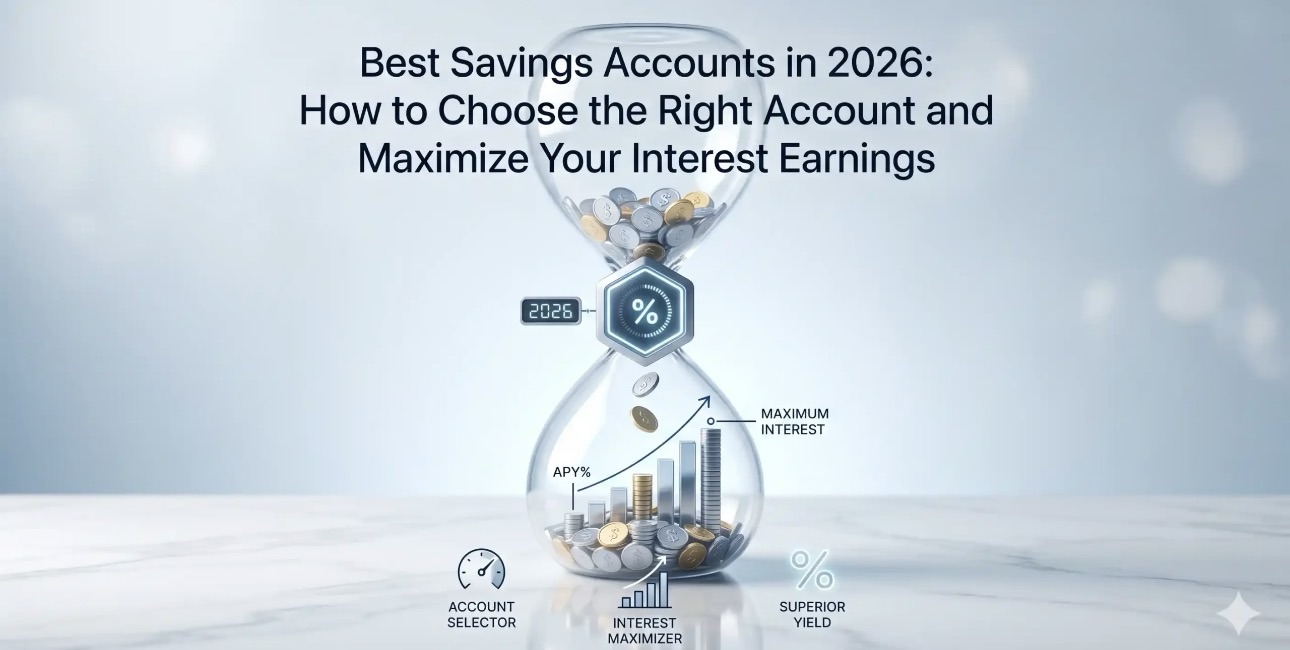
Saving money is one of the foundations of financial success, but where you keep your savings matters more than many people realize.
In 2026, rising interest rates, digital banking innovations, and inflation continue to reshape the savings landscape. Choosing the right savings account can help you grow your money faster, protect your purchasing power, and improve your overall financial strategy.
This complete guide explains how savings accounts work, what features to compare, how much interest you can realistically earn, and how to avoid the most common mistakes that cost savers money.
What Is a Savings Account?
A savings account is a bank account specifically designed to help individuals store money securely while earning interest on their balance.
Unlike checking accounts, savings accounts focus on preserving capital and generating returns rather than daily spending.
How Savings Accounts Work
The process is simple:
- Deposit money into the account.
- The bank pays interest on your balance.
- Interest is added periodically.
- Your savings grow over time through compound interest.
Savings accounts are commonly used for:
- Emergency funds
- Short-term goals
- Vacation savings
- House deposits
- Financial security reserves
Why Choosing the Right Savings Account Matters
Not all savings accounts offer the same benefits.
Two accounts with different interest rates can produce dramatically different results over time.
Example
| Balance | APY | Annual Interest |
|---|---|---|
| €10,000 | 1.0% | €100 |
| €10,000 | 4.0% | €400 |
| €25,000 | 4.0% | €1,000 |
| €50,000 | 4.0% | €2,000 |
A higher Annual Percentage Yield (APY) can significantly improve long-term savings growth.
Key Factors to Compare Before Opening a Savings Account
1. Annual Percentage Yield (APY)
The APY represents the total amount of interest earned over a year, including compound growth.
Generally:
- Higher APY = Higher earnings
- Lower APY = Slower savings growth
Always compare APYs before choosing an account.
2. Account Fees
Fees can quietly reduce your returns.
Common Banking Fees
| Fee Type | What to Check |
|---|---|
| Monthly Maintenance Fees | Avoid when possible |
| Transfer Fees | Review carefully |
| Withdrawal Penalties | Understand restrictions |
| Minimum Balance Fees | Check account requirements |
A high-interest account loses much of its value if fees are excessive.
3. Accessibility and Liquidity
Your savings should remain accessible when needed.
Consider:
- Online access
- Mobile banking features
- ATM availability
- Transfer speed
- Withdrawal restrictions
Emergency funds should generally remain highly liquid.
4. Deposit Protection
One of the most important factors is account security.
Most regulated banks participate in deposit protection programs that safeguard customer funds up to specific limits.
Before opening an account, verify:
- Regulatory oversight
- Deposit insurance coverage
- Financial institution reputation
Safety should always come before yield.
Types of Savings Accounts Available in 2026
Traditional Savings Accounts
Offered by traditional banks and credit unions.
Advantages
- Established institutions
- Strong customer support
- Physical branches
Disadvantages
- Lower interest rates
- Higher operating costs
Online Savings Accounts
Online banks continue to gain popularity.
Benefits
- Higher APYs
- Lower fees
- Modern mobile apps
- Faster account opening
Many online savings accounts now outperform traditional banks in terms of returns.
High-Yield Savings Accounts
High-yield savings accounts are among the fastest-growing financial products.
Features
- Competitive interest rates
- Daily interest accrual
- Strong liquidity
- Online management
These accounts are often ideal for emergency funds and short-term savings goals.
Money Market Accounts
Money market accounts combine features of savings and checking accounts.
Typical Benefits
- Higher interest rates
- Limited check-writing capabilities
- Flexible access to funds
They can be useful for individuals maintaining larger cash balances.
How Much Can You Earn with a Savings Account?
The answer depends on:
- Account balance
- Interest rate
- Contribution frequency
- Compounding schedule
Example Savings Scenario
If you deposit €300 per month into an account earning 4% annually:
| Year | Contributions | Approximate Balance |
|---|---|---|
| 1 | €3,600 | €3,670 |
| 3 | €10,800 | €11,500+ |
| 5 | €18,000 | €20,000+ |
The combination of regular deposits and compound interest can accelerate savings growth significantly.
Emergency Fund Strategy for 2026
Financial experts generally recommend keeping between three and six months of living expenses in an accessible savings account.
Example
| Monthly Expenses | Recommended Emergency Fund |
|---|---|
| €1,500 | €4,500–€9,000 |
| €2,500 | €7,500–€15,000 |
| €4,000 | €12,000–€24,000 |
This reserve provides protection against unexpected expenses, job loss, or financial emergencies.
Savings Accounts vs Investing
Many people wonder whether they should save or invest.
The answer is usually both.
| Savings Account | Investing |
|---|---|
| Lower Risk | Higher Risk |
| Stable Returns | Greater Growth Potential |
| Immediate Access | Long-Term Focus |
| Emergency Funds | Wealth Building |
A strong financial plan often combines both strategies.
Common Mistakes Savers Make
Avoiding mistakes can significantly improve financial outcomes.
Most Common Errors
- Choosing accounts based only on advertising
- Ignoring fees
- Leaving cash in low-interest accounts
- Failing to compare APYs
- Not reviewing account terms regularly
- Keeping excessive cash instead of investing surplus funds
Regularly reviewing your banking products can improve returns with minimal effort.
Smart Savings Strategy for 2026
A balanced financial approach could include:
Step 1
Build a fully funded emergency reserve.
Step 2
Keep short-term goals in a high-yield savings account.
Step 3
Invest excess capital for long-term growth.
Step 4
Review interest rates every six to twelve months.
Step 5
Move funds if significantly better opportunities become available.
Frequently Asked Questions
What is the safest place to keep savings?
Regulated banks with deposit protection programs are generally considered among the safest options.
How much money should I keep in a savings account?
Many financial advisors recommend maintaining at least three to six months of living expenses.
Can inflation reduce the value of savings?
Yes. If inflation exceeds the interest earned, purchasing power declines over time.
Are online savings accounts safe?
Most reputable online banks use advanced security systems and regulatory protections similar to traditional banks.
What is a good APY in 2026?
Competitive rates vary depending on market conditions, so comparing available offers regularly is important.
Final Thoughts
Choosing the best savings account is about more than simply finding a place to store money.
The right account can help you earn more interest, protect your financial security, maintain liquidity, and support long-term financial goals.
By comparing APYs, minimizing fees, understanding account features, and regularly reviewing your options, you can make your savings work harder while maintaining the flexibility and security you need.
Smart saving is not just about putting money aside—it’s about making every euro work as efficiently as possible.
Deja una respuesta