
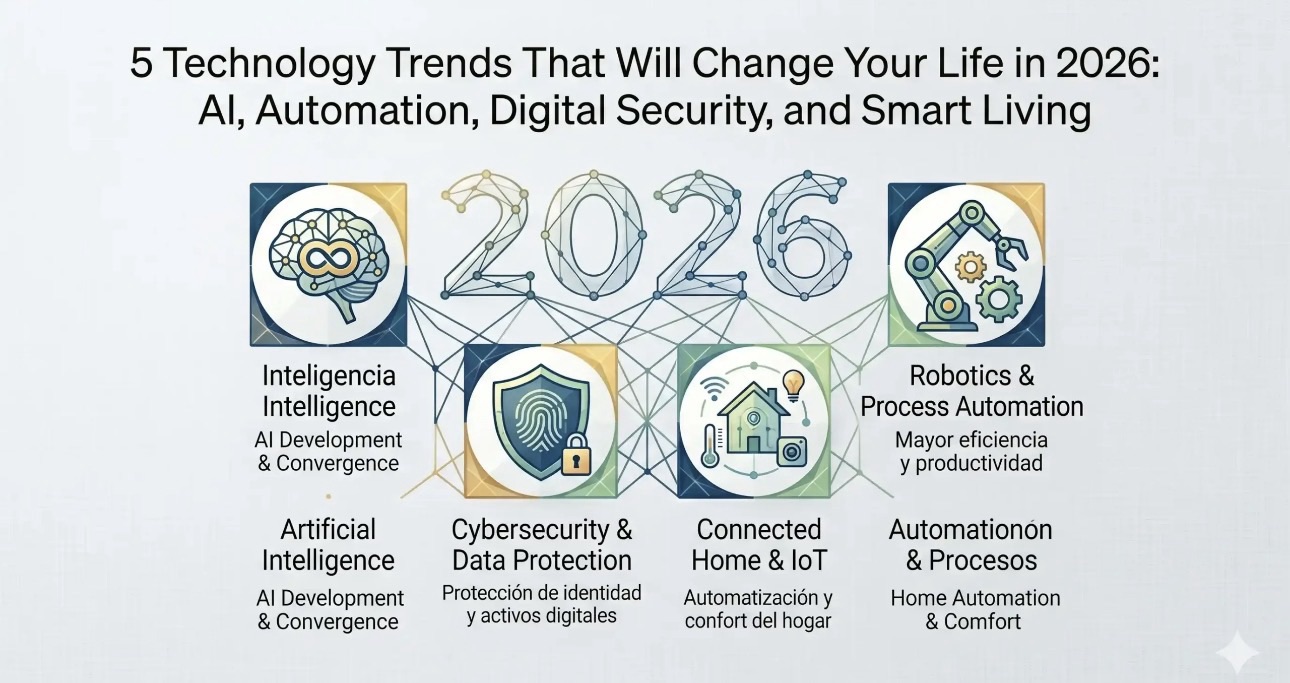
Technology is evolving faster than ever, transforming the way we work, communicate, learn, manage money, and make everyday decisions.
What once seemed futuristic has quickly become part of daily life. Artificial intelligence can write emails, smart devices manage our homes, and digital platforms allow us to work from virtually anywhere in the world.
Understanding the most important technology trends of 2026 is essential for anyone who wants to stay competitive, productive, and prepared for the future.
In this guide, we’ll explore five major technology trends that are reshaping everyday life and creating new opportunities for individuals and businesses alike.
1. Artificial Intelligence Becomes Part of Everyday Life
Artificial intelligence is no longer limited to tech companies and research laboratories.
In 2026, AI has become a mainstream productivity tool used by millions of people every day.
From virtual assistants and content creation tools to customer support systems and financial planning applications, AI is helping users save time and improve efficiency.
Common AI Applications in 2026
| AI Technology | Everyday Use |
|---|---|
| AI Writing Assistants | Emails, reports, content creation |
| Virtual Assistants | Scheduling and reminders |
| AI Search Engines | Faster information discovery |
| AI Customer Support | Instant problem solving |
| Personal Finance AI | Budgeting and spending analysis |
Many professionals now use AI to automate repetitive tasks, allowing them to focus on higher-value activities that require creativity and critical thinking.
Why This Matters
Artificial intelligence is becoming one of the biggest productivity boosters of the decade.
People who learn how to effectively use AI tools may gain significant advantages in both their personal and professional lives.
2. Automation Will Transform Work and Home Life
Automation is rapidly changing how routine tasks are completed.
Many activities that previously required manual effort can now be handled automatically through software, connected devices, and intelligent systems.
Workplace Automation
Businesses increasingly automate:
- Data entry
- Customer service
- Scheduling
- Reporting
- Marketing campaigns
- Inventory management
As a result, employees can dedicate more time to strategic and creative work.
Smart Home Automation
At home, automation continues to expand through connected devices.
Popular examples include:
- Smart lighting systems
- Automated thermostats
- Security cameras
- Voice-controlled assistants
- Robot vacuum cleaners
These technologies improve convenience while helping households reduce energy consumption and operating costs.
3. Cybersecurity and Digital Privacy Become Top Priorities
As digital services become more integrated into everyday life, protecting personal information has become increasingly important.
Cybercrime continues to grow worldwide, and individuals are becoming more aware of the risks associated with data breaches, identity theft, and online fraud.
Why Digital Security Matters
Every day, people share sensitive information through:
- Online banking platforms
- E-commerce websites
- Social media accounts
- Cloud storage services
- Mobile applications
Protecting this information is essential.
Security Trends in 2026
| Security Technology | Purpose |
|---|---|
| Multi-Factor Authentication | Stronger account protection |
| End-to-End Encryption | Secure communications |
| Biometric Verification | Identity confirmation |
| AI Threat Detection | Real-time security monitoring |
| Password Managers | Credential protection |
Organizations are investing heavily in cybersecurity solutions, making digital security one of the fastest-growing sectors in technology.
4. Remote Work and Digital Collaboration Continue to Expand
Remote and hybrid work models are now permanent components of the modern economy.
Advances in cloud computing and collaboration software have made it possible for teams to work together effectively regardless of location.
Popular Collaboration Technologies
- Video conferencing platforms
- Cloud document sharing
- Project management software
- Team messaging systems
- Virtual workspaces
These tools help organizations improve flexibility while reducing operational costs.
Benefits for Workers
Remote work offers:
- Reduced commuting time
- Better work-life balance
- Access to global job opportunities
- Increased flexibility
- Improved productivity for many professionals
The ability to work from anywhere continues to reshape the global labor market.
5. Technology Focused on Health and Well-Being
Digital health is becoming one of the most influential technology sectors.
Consumers increasingly use technology to monitor physical health, improve productivity, and manage stress levels.
Popular Health Technologies
| Technology | Benefit |
|---|---|
| Fitness Trackers | Activity monitoring |
| Smart Watches | Health metrics tracking |
| Sleep Monitoring Apps | Better sleep habits |
| Meditation Applications | Stress reduction |
| AI Health Assistants | Personalized recommendations |
Many users now receive real-time insights into their health through wearable devices and mobile applications.
The Rise of Preventive Health Technology
Instead of reacting to health problems after they occur, technology is helping people identify potential issues earlier and make healthier lifestyle decisions.
This proactive approach is expected to become even more common in the coming years.
Cloud Computing: The Technology Behind Everything
Although it often goes unnoticed, cloud computing powers many of the technologies discussed above.
Cloud infrastructure enables:
- AI services
- Remote work platforms
- Digital collaboration tools
- Streaming services
- Online storage
- Financial applications
Without cloud computing, many modern digital experiences would not be possible.
As businesses continue migrating operations to the cloud, demand for cloud services is expected to grow significantly throughout 2026 and beyond.
Emerging Technologies to Watch
Several additional technologies are expected to gain momentum over the next few years.
Future Innovations
- AI-powered personal assistants
- Quantum computing research
- Augmented reality applications
- Smart city infrastructure
- Autonomous transportation systems
- Advanced robotics
- Digital identity solutions
While some remain in early development stages, many experts believe these innovations will have a major impact on society during the next decade.
Frequently Asked Questions
What is the most important technology trend in 2026?
Artificial intelligence is widely considered the most influential technology trend due to its impact on productivity, business operations, education, healthcare, and personal finance.
How will automation affect jobs?
Automation is expected to eliminate some repetitive tasks while creating new opportunities in technology management, AI supervision, cybersecurity, and digital services.
Is digital privacy becoming more important?
Yes. As people share more information online, protecting personal data has become a critical concern for both individuals and organizations.
Will remote work continue growing?
Most analysts expect hybrid and remote work models to remain important due to their flexibility and cost-saving benefits.
How can I prepare for future technology changes?
Continuous learning, digital literacy, and familiarity with AI tools are among the best ways to adapt to technological change.
Final Thoughts
Technology trends in 2026 are about much more than gadgets and software.
They are reshaping how people work, manage money, communicate, learn, and take care of their health.
Artificial intelligence, automation, cybersecurity, remote work, and digital wellness are becoming central components of modern life.
Those who understand these changes and learn how to use technology effectively will be better positioned to benefit from the opportunities of the digital economy while remaining competitive in an increasingly connected world.
Autor: Equipo tritableta.
Deja una respuesta