
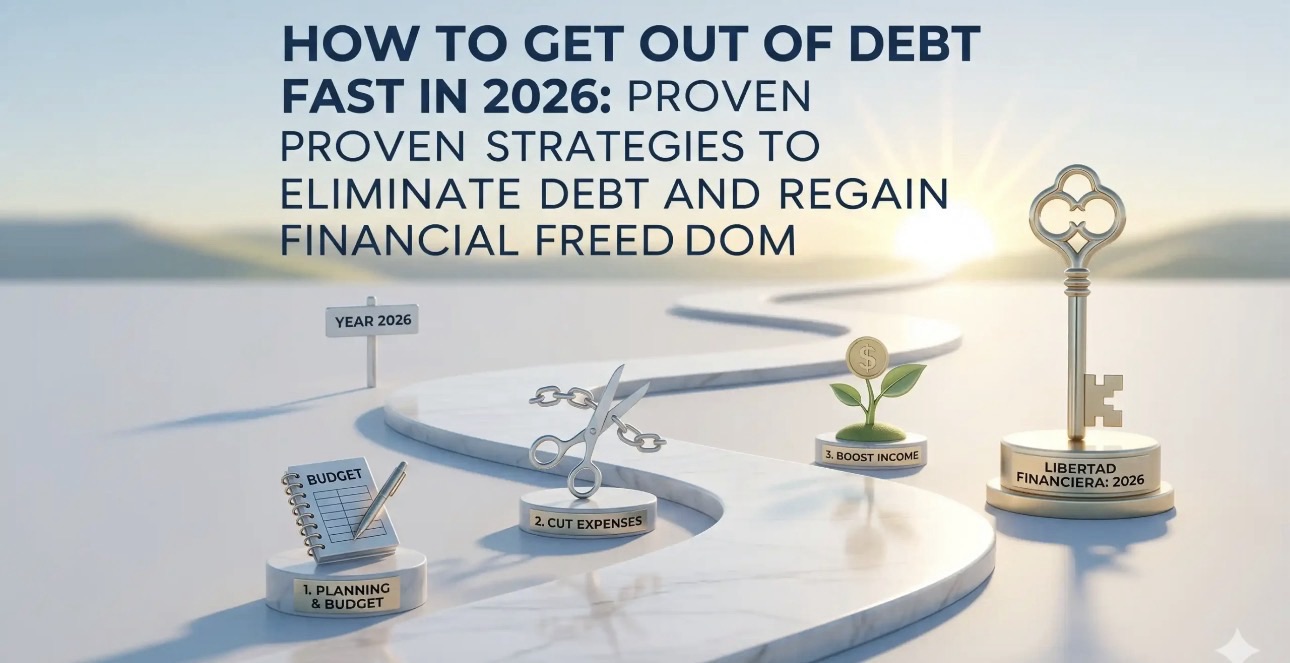
Debt can feel overwhelming, but with the right plan, it is possible to take control of your finances and eliminate debt faster than you may think.
Whether you are dealing with credit card balances, personal loans, medical bills, or multiple forms of consumer debt, creating a structured repayment strategy can reduce financial stress, lower interest costs, and help you build long-term wealth.
This guide explains the most effective debt repayment methods, common mistakes to avoid, and practical strategies that can help you achieve financial freedom in 2026.
Why Paying Off Debt Should Be a Financial Priority
Debt affects more than just your monthly budget.
High debt levels can impact:
- Your credit score
- Loan approval chances
- Mortgage eligibility
- Financial security
- Retirement planning
- Mental well-being
The longer debt remains unpaid, the more interest accumulates, making it harder to build savings and investments.
Step 1: Create a Complete Debt Inventory
Before you can eliminate debt, you need a clear picture of your financial situation.
List every debt you currently owe.
Debt Tracking Template
| Debt Type | Balance | Interest Rate | Minimum Payment |
|---|---|---|---|
| Credit Card | $ | % | $ |
| Personal Loan | $ | % | $ |
| Auto Loan | $ | % | $ |
| Student Loan | $ | % | $ |
| Other Debt | $ | % | $ |
Many people underestimate how much they owe until they see everything organized in one place.
Step 2: Understand the Real Cost of Debt
Not all debt is equally expensive.
Example
| Balance | Interest Rate | Annual Interest Cost |
|---|---|---|
| $5,000 | 8% | $400 |
| $5,000 | 20% | $1,000 |
| $10,000 | 25% | $2,500 |
High-interest debt can significantly slow your progress toward financial independence.
Step 3: Choose the Best Debt Repayment Strategy
Two proven repayment methods dominate personal finance advice.
The Debt Snowball Method
The debt snowball strategy focuses on paying off the smallest balance first.
Benefits
- Quick psychological wins
- Increased motivation
- Easier habit formation
Best For
- People struggling with motivation
- Individuals managing multiple small debts
The Debt Avalanche Method
The avalanche strategy focuses on paying off the highest-interest debt first.
Benefits
- Minimizes total interest paid
- Faster overall debt elimination
- Mathematically optimal
Best For
- People focused on maximizing savings
- Borrowers with high-interest debt
Debt Snowball vs Debt Avalanche
| Factor | Snowball | Avalanche |
|---|---|---|
| Motivation | High | Moderate |
| Interest Savings | Lower | Higher |
| Speed of Small Wins | Faster | Slower |
| Long-Term Efficiency | Good | Excellent |
Both methods work. The best strategy is the one you can consistently follow.
Step 4: Reduce Expenses Aggressively
Temporary sacrifices can dramatically accelerate debt repayment.
Expenses to Review
- Subscription services
- Dining out
- Entertainment spending
- Impulse purchases
- Unused memberships
- Premium services
Even an extra $200–$500 per month directed toward debt can significantly shorten repayment timelines.
Step 5: Increase Your Income
Cutting expenses has limits.
Increasing income often creates the biggest breakthroughs.
Popular Ways to Earn Extra Income
| Side Income Option | Potential Flexibility |
|---|---|
| Freelancing | High |
| Online Consulting | High |
| Tutoring | Medium |
| Selling Unused Items | Immediate |
| Remote Work | High |
| Content Creation | Long-Term Potential |
Many financially successful people combine debt repayment with income growth.
Step 6: Consider Debt Consolidation
Debt consolidation combines multiple debts into a single payment.
Potential Benefits
- Lower interest rates
- Simpler payments
- Improved cash flow
- Faster repayment plans
Debt consolidation may be useful for borrowers carrying high-interest credit card balances.
Consolidation Options
- Personal loans
- Balance transfer credit cards
- Home equity loans
- Debt management programs
Always compare fees and interest rates before consolidating.
Step 7: Improve Your Credit Score While Paying Debt
Debt repayment and credit improvement often go hand in hand.
Credit Score Improvement Checklist
✅ Pay all bills on time
✅ Reduce credit utilization
✅ Avoid opening unnecessary accounts
✅ Monitor your credit report
✅ Keep older accounts active when appropriate
A stronger credit score can qualify you for better loan terms in the future.
How Long Does It Take to Get Out of Debt?
The timeline depends on:
- Total debt balance
- Interest rates
- Monthly repayment capacity
- Additional income sources
Example
If you owe $5,000 and pay $500 per month:
| Monthly Payment | Approximate Payoff Time |
|---|---|
| $250 | 20–24 Months |
| $500 | 10–12 Months |
| $1,000 | 5–6 Months |
Consistency is often more important than speed.
Common Debt Repayment Mistakes
Avoiding mistakes can save thousands of dollars.
Most Common Errors
- Making only minimum payments
- Ignoring interest rates
- Taking on new debt while repaying old debt
- Lacking a monthly budget
- Using debt to fund lifestyle inflation
- Emotional spending
Successful debt elimination requires both strategy and discipline.
What to Do After Becoming Debt-Free
Paying off debt is not the final goal.
It is the beginning of wealth building.
Recommended Next Steps
- Build a fully funded emergency fund.
- Increase retirement contributions.
- Start investing regularly.
- Maintain healthy financial habits.
- Continue improving your credit profile.
Many people experience significant financial progress after redirecting debt payments toward investments.
Debt-Free Financial Plan
| Priority | Action |
|---|---|
| 1 | Pay Off High-Interest Debt |
| 2 | Build Emergency Savings |
| 3 | Maximize Retirement Contributions |
| 4 | Invest Consistently |
| 5 | Build Multiple Income Streams |
This progression creates long-term financial stability and wealth accumulation.
Frequently Asked Questions
Should I save money while paying off debt?
Many financial experts recommend maintaining a small emergency fund while aggressively paying down high-interest debt.
Is debt consolidation worth it?
It can be beneficial if it significantly reduces interest costs and simplifies repayment.
What is the fastest way to get out of debt?
Combining aggressive repayments, reduced expenses, and increased income is often the fastest path.
Can paying off debt improve my credit score?
In many cases, reducing debt and maintaining on-time payments can positively affect credit scores.
Should I invest before becoming debt-free?
It depends on interest rates and financial goals, but high-interest debt is often prioritized first.
Final Thoughts
Getting out of debt in 2026 is not about finding a miracle solution.
It is about creating a realistic plan, staying disciplined, and making consistent progress every month.
Every payment reduces financial pressure, improves flexibility, and moves you closer to financial independence.
The sooner you take control of your debt, the sooner your money can start working toward building wealth instead of paying interest.
Deja una respuesta